
Our In-House Digital Dental Laboratory
At Ballipinar, crowns, bridges and implant-supported restorations are not sent to an external laboratory. They are produced in the digital laboratory inside the clinic. This page explains each step from the impression to the moment your restoration is fitted, the points at which it is checked, and what that means for your treatment schedule.
Why a laboratory inside the clinic
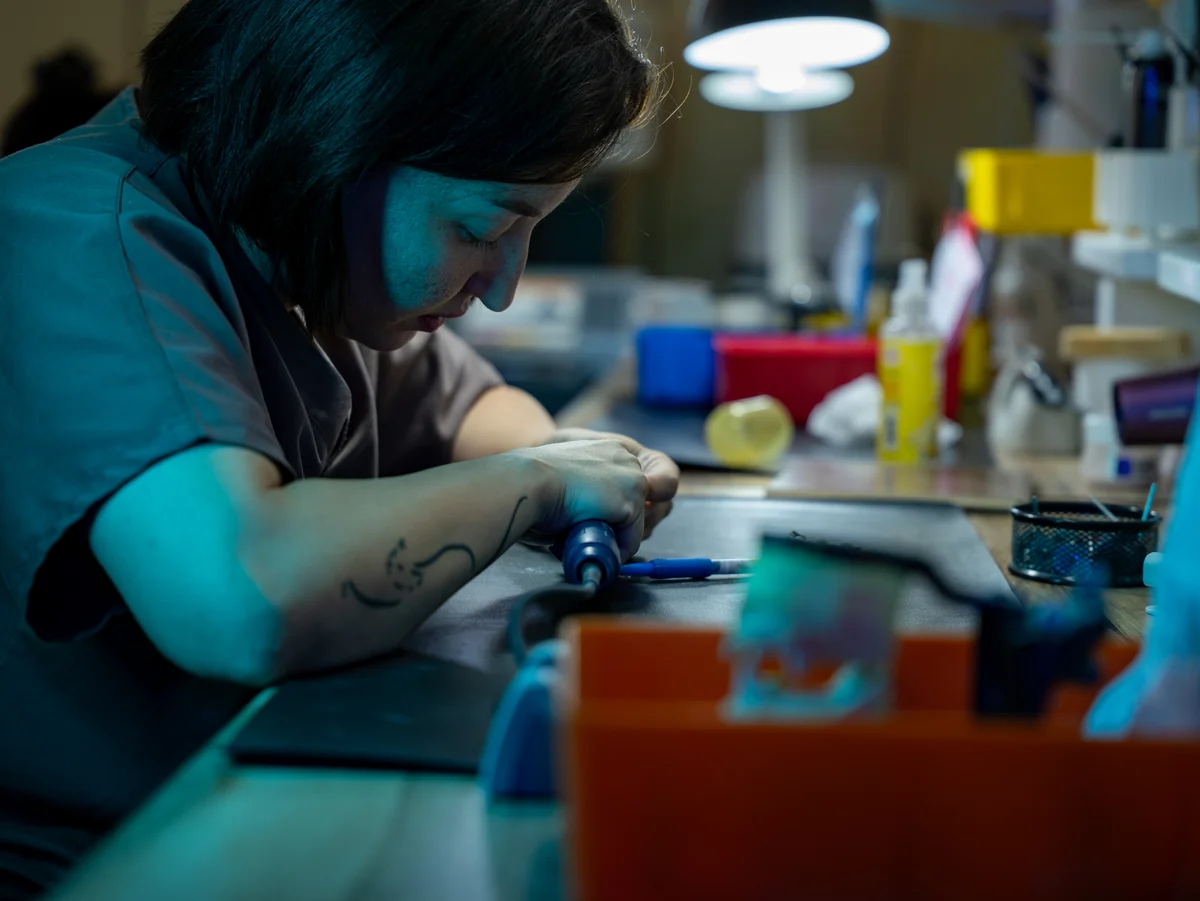
When production is outsourced, every adjustment between the dentist and the technician means another journey back and forth. With the laboratory on site, the technician can attend the try-in, see what the dentist sees, and make the correction the same day. For patients travelling from abroad, that difference shows up directly in the number of days.
The digital workflow
- Digital impression. An intraoral scanner produces a three-dimensional model of your teeth. In most cases conventional impression material is not needed.
- Design. Following the dentist's plan and the smile design, the technician designs the restoration on screen. Tooth length, shape and bite are set at this stage.
- Milling. The design is machined from a zirconia or ceramic block on a computer-controlled unit.
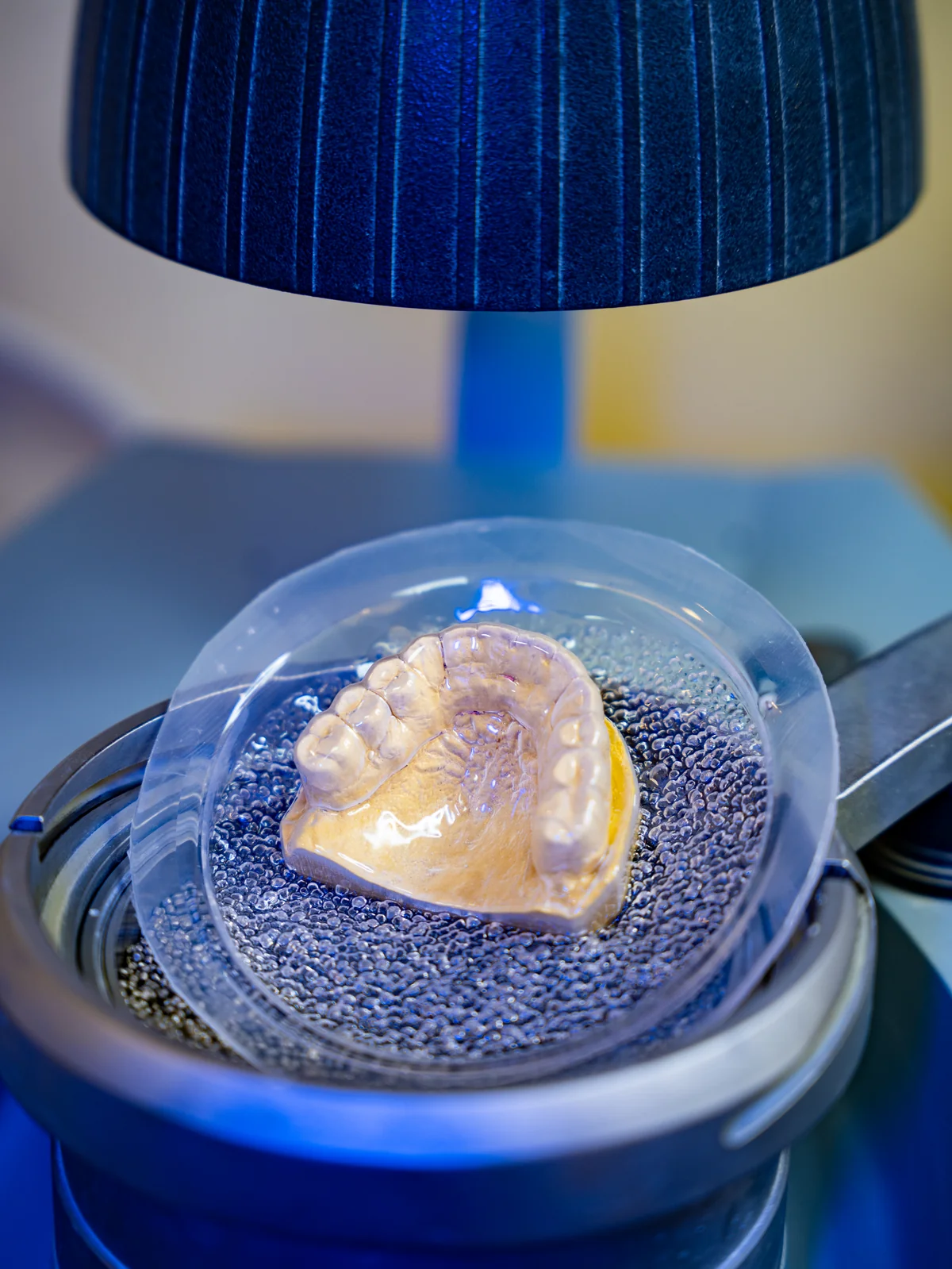
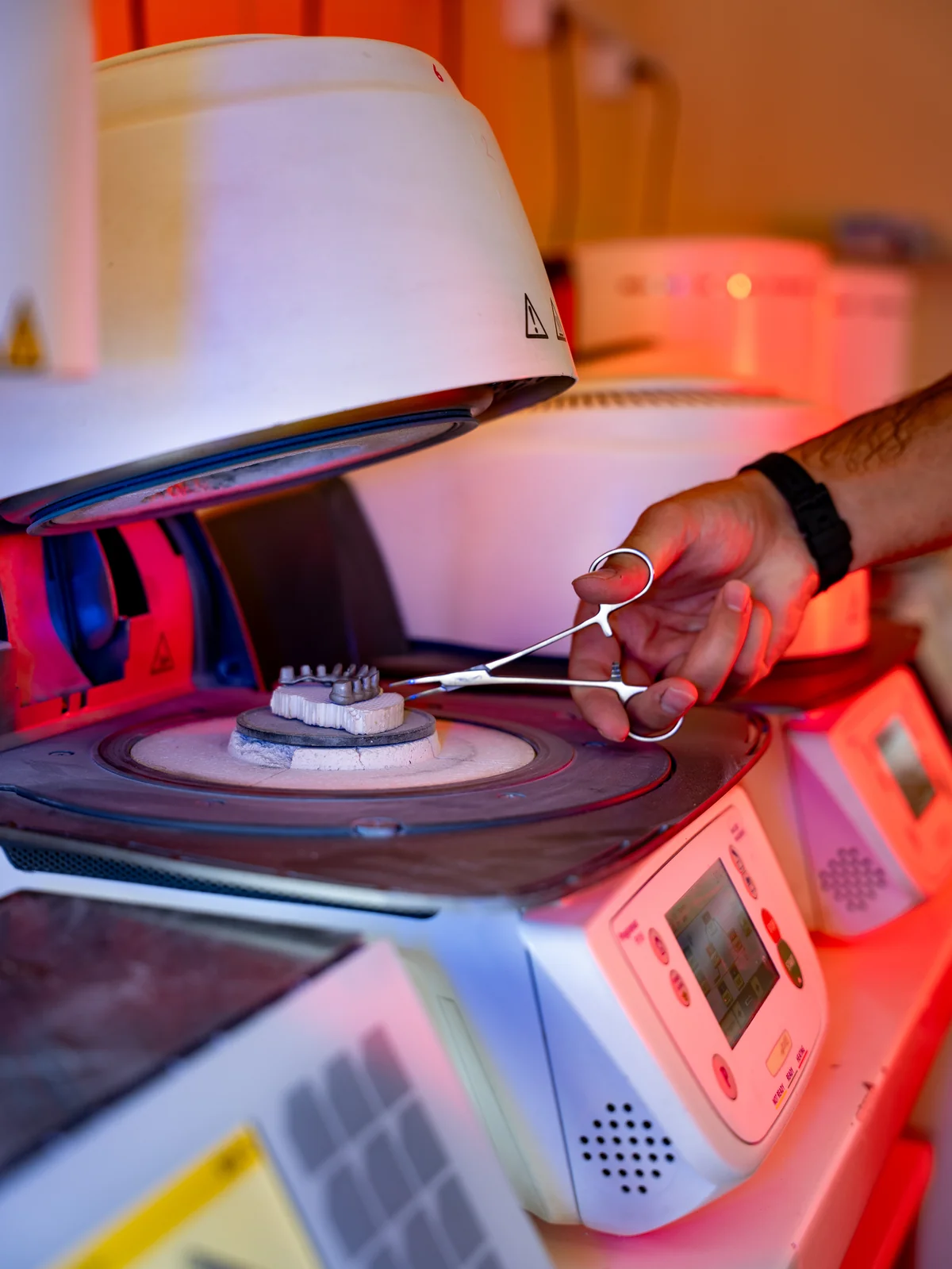
- Sintering. Zirconia is fired at high temperature to reach its final strength.
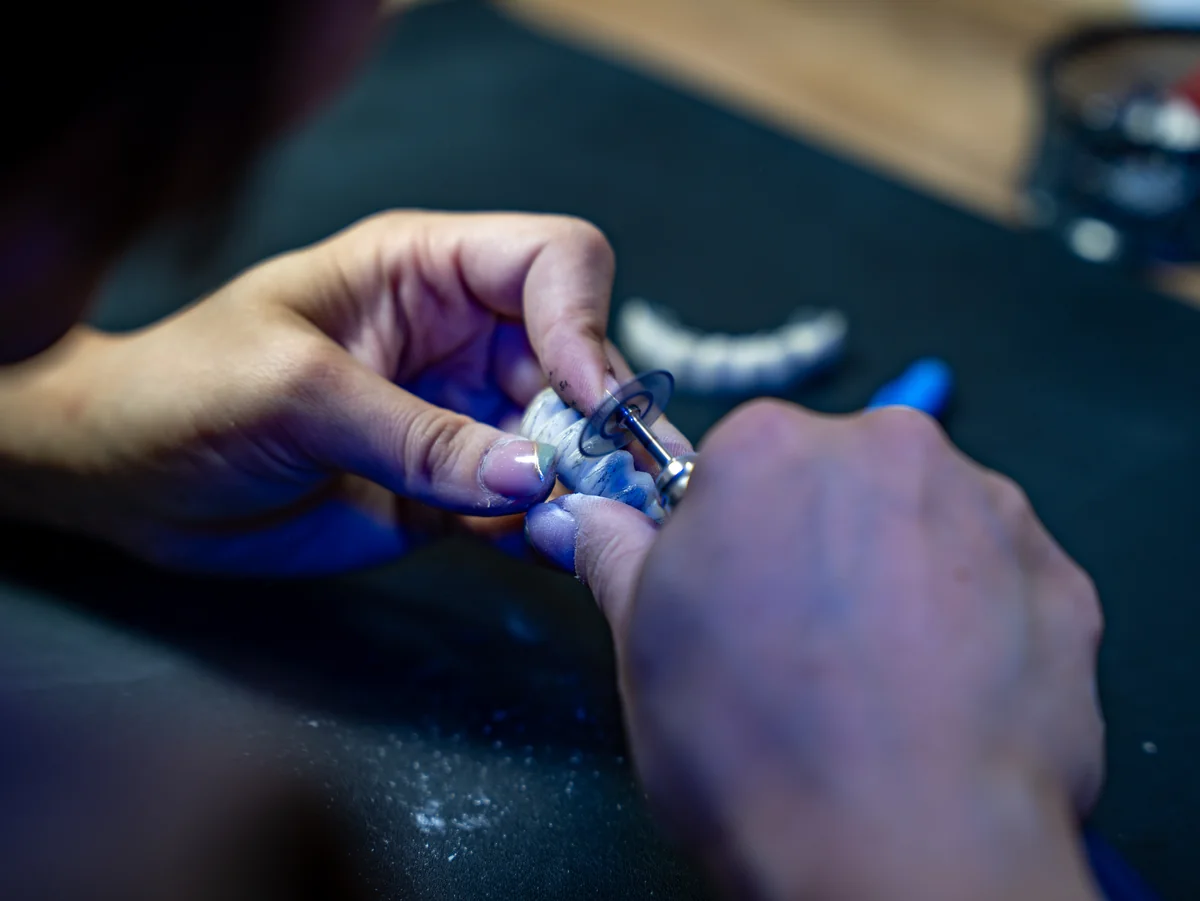
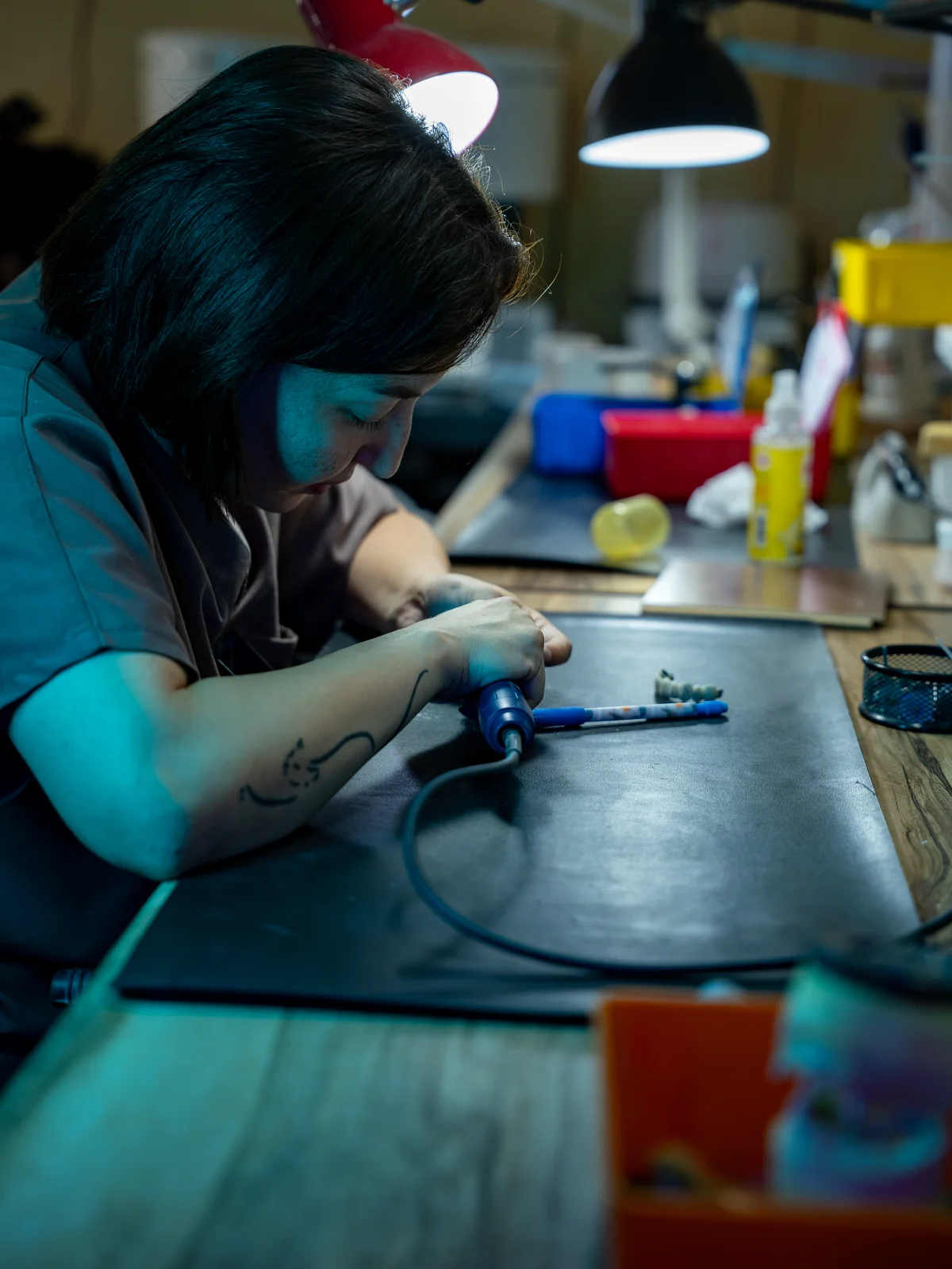
- Staining and glazing. Colour is applied by hand to match the neighbouring teeth and your natural shade. Translucency is adjusted here.
- Try-in and adjustment. The restoration is tried in your mouth. Any adjustment is carried out in the laboratory the same day.
Quality control
Every restoration is checked at three points: design approval, fit check after milling, and the final try-in in the mouth. Bite, contact with neighbouring teeth and the gum margin are assessed separately. A piece that does not meet the check is remade.
Materials
Restorations are made from CE-certified zirconia and ceramic materials intended for medical use. Your dentist selects the material according to the position of the tooth, the chewing load and the aesthetic requirement, and it is recorded in writing in your treatment plan.
The laboratory team
Production is carried out by our dental technicians, who work alongside the dentists from the planning stage onward.
Where it is used
Zirconium crowns, porcelain and E-max veneers, bridges, implant-supported restorations and smile design work are all produced in this laboratory.
Frequently asked questions
Is my restoration sent to an outside laboratory?
No. It is produced in the laboratory inside the clinic.
What if I do not like the try-in?
The adjustment is made in the laboratory. The purpose of the try-in is to get your approval before the final restoration is produced.
Who chooses the shade?
The shade is decided together with your dentist and the technician at the try-in, taking your facial features and neighbouring teeth into account.
What if there is a problem after I return home?
The materials used are recorded in your treatment plan. Write to our support team and your case is reviewed from that record.
Request an appointment to discuss your treatment plan.
Request an appointment

 Antalya

 Antalya